Rubio Challenges Security Council to Pass Hormuz Resolution as 23,000 Sailors Remain Stranded and Iran’s Mines Block Global Trade
Summary
US Secretary of State Marco Rubio on Tuesday, May 5, 2026, delivered a blistering challenge to the United Nations Security Council, demanding it pass a resolution requiring Iran to stop attacking commercial vessels, disclose and remove sea mines from the Strait of Hormuz, and allow humanitarian relief into the waterway. Rubio framed the resolution co-drafted by the US alongside Bahrain, Saudi Arabia, the UAE, Kuwait, and Qatar as a fundamental test of the UN’s relevance and utility. He also launched “Project Freedom,” a defensive US naval operation to escort stranded commercial ships safely through the strait, where nearly 23,000 civilian sailors from 87 countries remain trapped aboard more than 1,500 merchant vessels. A previous similar resolution was vetoed by Russia and China in April, and Rubio urged both permanent members not to repeat that outcome.
At President Trump’s direction, the United States, alongside Bahrain, Saudi Arabia, the United Arab Emirates, Kuwait, and Qatar, drafted a UN Security Council Resolution to defend freedom of navigation in the Strait of Hormuz. The draft resolution requires Iran to cease attacks, mining, and tolling. It demands that Iran disclose the number and location of the sea mines it has laid and cooperate with efforts to remove them, while also supporting the establishment of a humanitarian corridor.
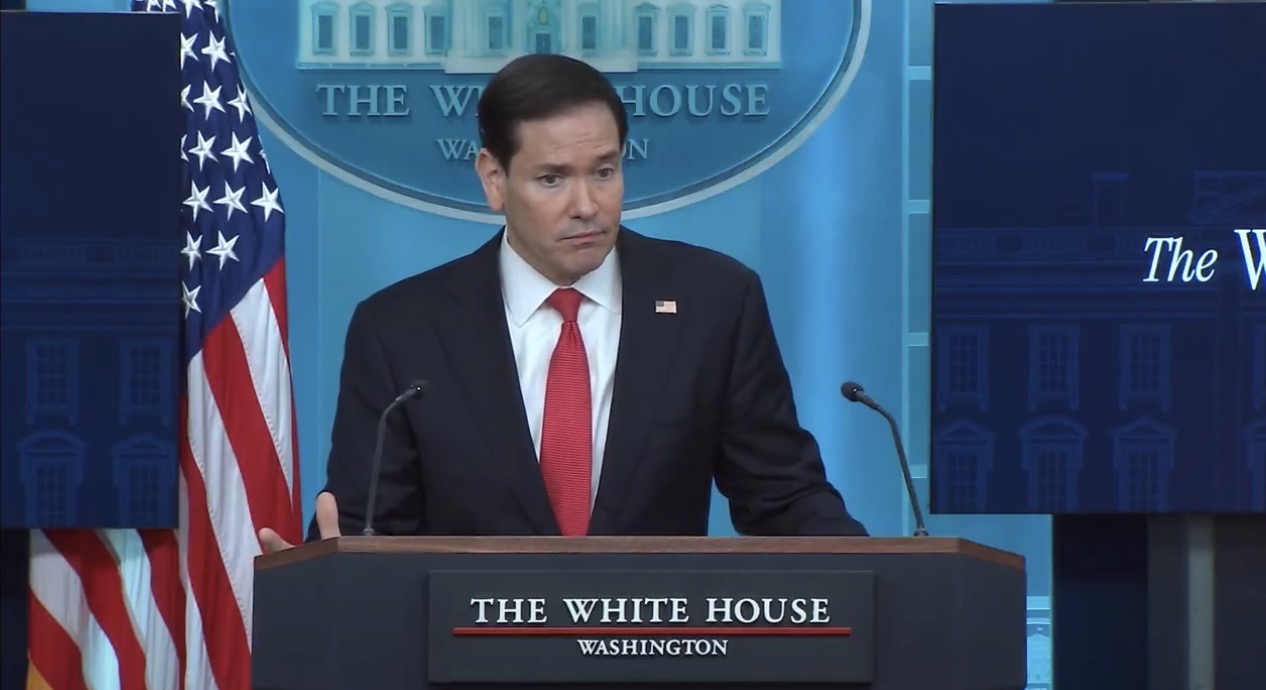
Speaking at the White House on Tuesday, Secretary of State Marco Rubio stripped away all diplomatic ambiguity about what America is asking of the international community. “All we’re asking them to do is to condemn it, to call on Iran to stop blowing ships, to remove these mines, and to allow humanitarian relief to come through because there’s humanitarian aid that’s trapped. That’s it. It is a very modest request.”
“If you’re telling me that the international community and hundreds of countries cannot rally behind that, then I don’t know what the utility of the UN system is if it can’t even solve something as straightforward as that,” Rubio said.
The diplomatic stakes are made tangible by the human numbers behind the Hormuz crisis. Nearly 23,000 civilians from 87 countries remain stranded aboard more than 1,500 merchant ships a situation Rubio described as leaving them “trapped inside of the Gulf and left for dead by this Iranian regime.” Iranian attacks on shipping, mining of the waterway, and the ongoing blockade have disrupted approximately 20% of global oil transit, driving up energy prices worldwide.
Commercial traffic through the Strait of Hormuz has been largely blocked since February 28, 2026, when the United States and Israel launched an air war against Iran and assassinated its Supreme Leader Ali Khamenei. In retaliation, Iran launched missile and drone attacks on Israel, US military bases, and US allied Gulf states. The Iranian Revolutionary Guard issued warnings forbidding passage through the strait, has boarded and attacked merchant ships, and has laid sea mines in the strait.
UN Security Council members began closed talks on Tuesday on the newly proposed text. Fresh exchanges of fire on Monday underscored the stakes, as the US said it destroyed six Iranian small boats and Iranian missiles hit a UAE oil port shaking a fragile ceasefire and reinforcing rival maritime blockades.
Rubio also launched what he described as a strictly defensive military operation. “The United States military is guiding stranded commercial ships safely through the strait and is working to restore freedom of navigation and putting an end to these efforts to hold the global economy hostage.” After Project Freedom began Monday morning, two US merchant ships have already safely passed through the strait. Project Freedom involves US naval assets including guided missile destroyers, aircraft, and unmanned systems, along with roughly 15,000 service members.
Rubio also made a direct appeal to the Security Council’s two most likely veto powers. “To both the Chinese and the Russians, I have argued that it is in their interest for that resolution to pass and for pressure to be brought on Iran, because it is in their interest not to see international waterways, particularly the Strait of Hormuz, be closed down and cause economic chaos to dozens and dozens of countries around the world.” A similar resolution introduced in April was shot down by Russia and China. Rubio acknowledged uncertainty about the outcome: “Everyone wouldn’t want to see this vetoed again, and we’ve made some slight adjustments to the language. I don’t know if it will avoid a veto or not.”
In a late development on Tuesday, President Donald Trump announced a temporary pause in Project Freedom to explore progress in ongoing peace negotiations with Iran, while the US naval blockade remains firmly in place.
Analysis
Rubio’s challenge to the United Nations is both a genuine diplomatic appeal and a calculated political framing and the two functions are not in conflict. The UN Security Council is precisely the institution whose mandate covers exactly this scenario: an armed state blocking an international waterway, attacking commercial vessels, laying mines that threaten civilian sailors, and disrupting the humanitarian supply chains of dozens of countries simultaneously. If the Security Council cannot act on those facts, Rubio is correct that a serious question arises about its operational utility. The problem, as he knows better than most, is that the UN Security Council does not run on facts it runs on the geopolitical interests of its five permanent members. Russia and China’s April veto of an earlier Hormuz resolution was not a judgment about Iran’s guilt or innocence. It was a strategic calculation: that keeping the US bogged down in a Middle East maritime crisis, driving up global energy costs, and straining American military resources serves their respective interests more than the economic disruption of a closed Hormuz serves their own supply chains. Whether Rubio’s argument that a closed strait harms Chinese and Russian interests more than it helps them is persuasive to Beijing and Moscow is the central question this week’s Security Council deliberations will answer. A particularly alarming detail has emerged: Iran reportedly lost track of mines it planted in the Strait of Hormuz, meaning it is unable to fully open the strait even if it wished to comply with international pressure. That development transforms the Hormuz crisis from a political standoff into an active navigational emergency mines drifting in the world’s most critical energy chokepoint, potentially unknown even to the country that planted them. For the 23,000 civilian sailors stranded in the Gulf, that is not an abstraction. It is a daily reality of fear, shortage, and abandonment that the UN resolution, if it passes, might begin to address and that Project Freedom, however limited, is already attempting to confront. The world is watching whether the UN can rise to its own founding purpose. The strait is mined. The ships are trapped. The resolution is drafted. What happens next in that Security Council chamber will define, more than any speech, what the international order is still capable of delivering.
Tags