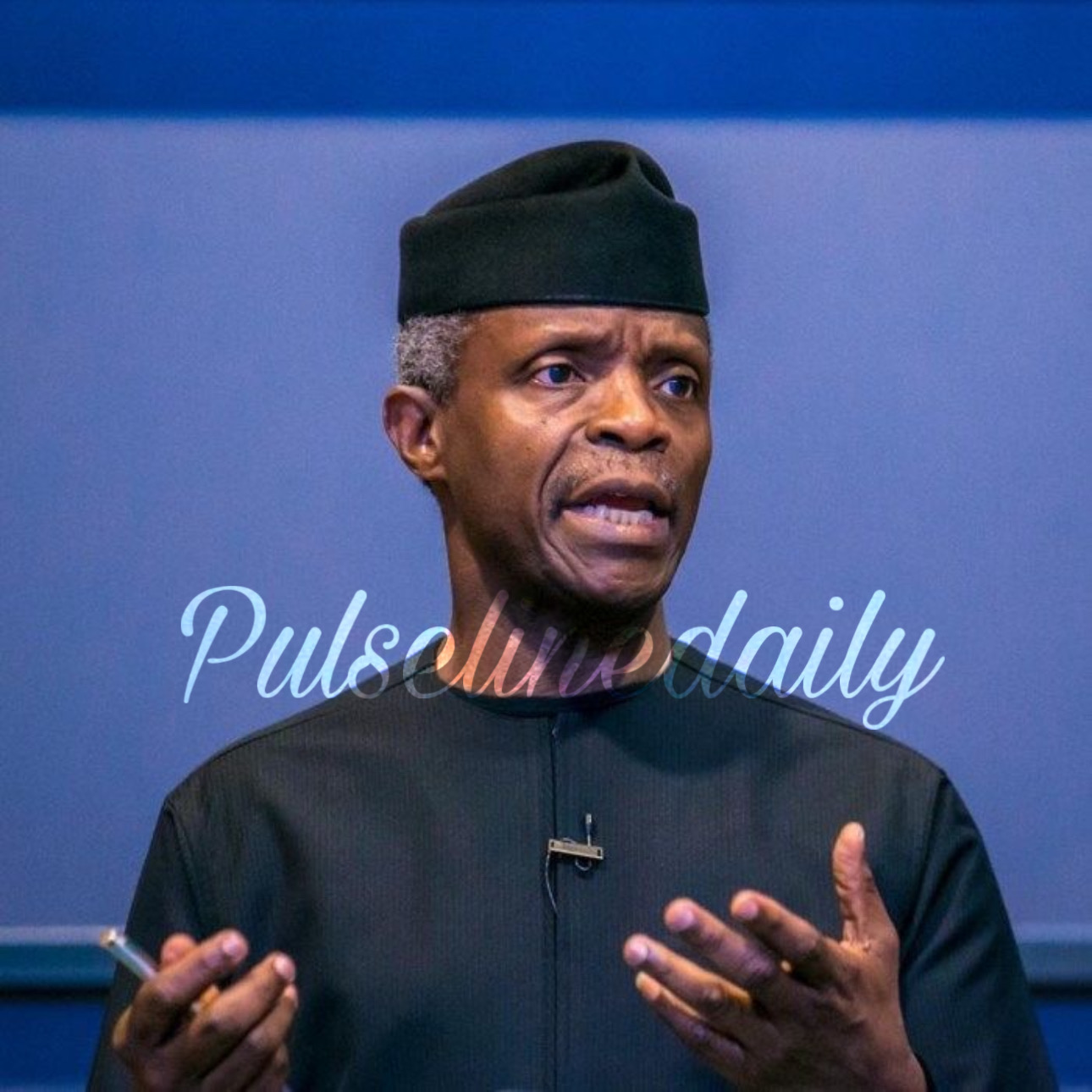
“There Is No Such Thing as Prosperity Gospel” Osinbajo’s Remark Ignites Public Clash With Gospel Artist Testimony Jaga
Summary
A heated religious and public debate has broken out in Nigeria after former Vice President Yemi Osinbajo declared that prosperity gospel does not exist, insisting there is only the gospel of Jesus Christ. Gospel artist Testimony Jaga swiftly challenged him in a viral video, questioning both his theological authority and his record in public office, triggering widespread conversation across religious and civic spaces.
A theological remark by one of Nigeria’s most prominent public figures has ignited a fierce debate cutting across faith, politics, and accountability.
Former Vice President Yemi Osinbajo sparked controversy after firmly rejecting the doctrine of prosperity gospel during a church debate, declaring that “there is no such thing as prosperity gospel” and insisting that “there is only the gospel of Jesus Christ.”
The comments did not go unchallenged. Gospel artist Testimony Jaga publicly disputed the former vice president in a viral video, countering his stance with the words: “There’s no such thing. There’s only a gospel… the gospel of Jesus Christ, sir.”
But Jaga’s pushback went beyond theology. He questioned Osinbajo’s authority to define church doctrine, stating: “With due respect, sir, I want to challenge you openly… show Nigerians what you did when you were vice president.”
The singer also linked his criticism to Osinbajo’s time in government, asking: “When they asked you to resign as a good Christian, did you resign?”
Pushing his argument further, Jaga raised concerns about social impact, saying: “Show us how many poor people you have helped… show us one school that you built.”
The exchange has since fueled wider discussions across religious and public circles, with many debating the role of wealth teachings in Christianity and how faith intersects with leadership and accountability.
Observers note that the clash highlights a deeper divide between those who see the gospel as strictly spiritual and those who believe it should also address material well being.
Analysis
The confrontation between Yemi Osinbajo and Testimony Jaga is fascinating precisely because it refuses to stay neatly within the boundaries of theology. What began as a doctrinal statement one that many mainstream and Reformed Christians would find entirely unremarkable quickly became a referendum on something far more charged: the moral credibility of a prominent Christian who also wielded significant state power. Osinbajo’s position is not theologically fringe. The critique of prosperity gospel the teaching that material wealth and physical health are God’s will for believers and accessible through faith, tithing, and confession has been a staple of mainstream evangelical and Reformed Christian thought globally for decades. Critics of the doctrine, including many respected theologians, argue that it distorts Scripture, exploits the vulnerable, and substitutes a transactional framework for genuine faith. On that narrow theological ground, Osinbajo’s statement is defensible. But Testimony Jaga’s response did something shrewd: it shifted the terrain entirely. Rather than engage Osinbajo on biblical grounds, Jaga turned the spotlight on the gap between Christian profession and public conduct asking, in effect, what Osinbajo’s Christianity actually produced for ordinary Nigerians during eight years of co-governing one of the world’s most unequal nations. It is a move that resonates deeply in a country where poverty is endemic and where the church, prosperity-inflected or otherwise, remains one of the few institutions ordinary people trust This is the real nerve the exchange has touched. In Nigeria, the prosperity gospel is not merely a doctrinal preference for millions, it is a theology of survival, a framework that says suffering is not inevitable and that God wills flourishing for the poor. To dismiss it without simultaneously demonstrating a superior alternative vision for the material conditions of the poor is, for many, an incomplete argument. Testimony Jaga, whatever the merits of his specific accusations against Osinbajo, has articulated that sentiment loudly and the viral spread of his video suggests many Nigerians feel the same way. The debate is far from over, and its significance extends well beyond two individuals. It asks a question Nigeria’s Christian public and its political class will have to keep answering: what does faithfulness to the gospel look like when millions remain poor, and who gets to judge?
Tags