Ruto Jokes About Nigerians’ Spoken English Amid Nigeria - Kenya Exchange
Summary
Kenyan President William Ruto has taken a lighthearted jab at Nigeria’s spoken English during a public event, drawing laughter from the room. The comment is widely being read as a good natured but pointed response to recent remarks by Nigeria’s President Bola Tinubu, who told Nigerians to be grateful they are better off than Kenya. Data from the EF English Proficiency Index 2025 suggests Ruto’s claim may not be entirely without basis.
What started as a political comparison between two of Africa’s most prominent economies has taken a humorous turn courtesy of Kenya’s President William Ruto.
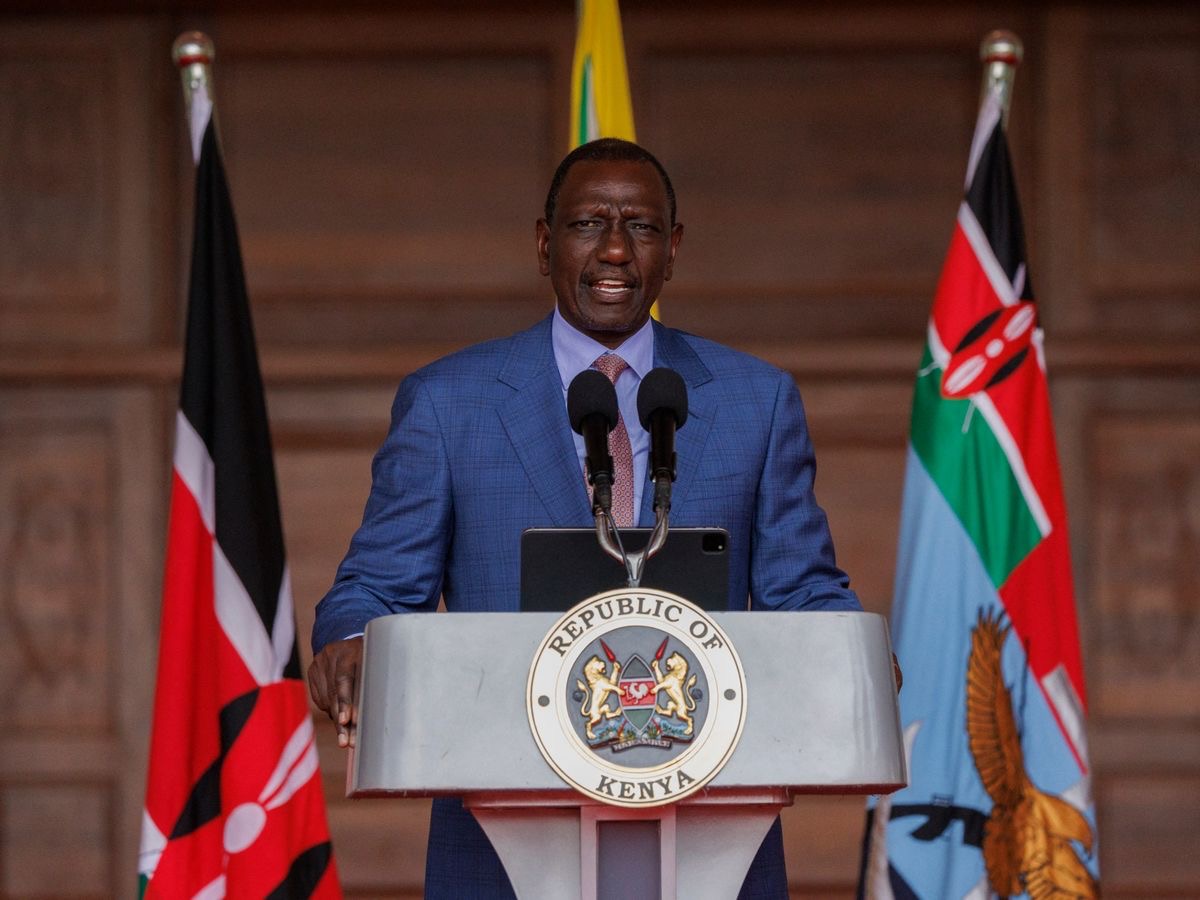
While speaking at an event, Ruto couldn’t resist aiming a lighthearted dig at Nigeria’s spoken English, telling the audience: “Our education is good. Our English is good. We speak some of the best English in the world. If you listen to a Nigerian speak, you need a translator.” The room reportedly erupted with laughter.
The context behind the quip matters. Ruto’s comment appears to be a direct response to Nigeria’s President Bola Tinubu, who weeks earlier, while speaking in Bayelsa State, told Nigerians to be thankful they are better off than Kenya despite rising fuel costs and economic hardship.
Tinubu had pointed to Kenya where thousands of youths recently took to the streets to protest fuel price increases and the rising cost of living as an example of why Nigerians should count their blessings. Ruto, it appears, has now responded albeit with humour rather than hostility.
This is not the first time the Kenyan president has made Nigeria the subject of a joke in good spirit. In 2025, Ruto whose daughter is married to a Nigerian joked that Nigerian men were causing a “brain drain in Kenya” by marrying all their women. The pattern suggests a leader who enjoys playful banter with his Nigerian counterparts rather than genuine rivalry.
Analysis
There is more beneath the surface of President Ruto’s joke than a simple punchline. The exchange between the two leaders reflects a quiet but real competition for influence, narrative, and prestige between Nigeria and Kenya two countries that both see themselves as natural leaders of the African continent. When Tinubu used Kenya as a benchmark for economic suffering, it was never going to go unanswered. Ruto simply chose laughter as his weapon of choice, which, in many ways, is a more effective political response than a formal rebuttal. The English proficiency angle, while framed as banter, also carries a genuine point. According to the EF English Proficiency Index 2025, which draws on results from 2.2 million test takers, Kenya ranks third in Africa for English proficiency, while Nigeria ranks fifth. South Africa tops the list, followed by Zimbabwe, with Zambia in fourth place. By that measure, Ruto’s boast has at least some data behind it even if the delivery was firmly tongue in cheek. What makes this story resonate beyond the politics is how much it reflects the warm but competitive relationship ordinary Nigerians and Kenyans share. Both nations have outsized cultural footprints across Africa. Both punch above their weight on the continent and globally. And both, it seems, enjoy the occasional dig at each other’s expense. That kind of inter-African banter playful, proud, and pointed is arguably a sign of growing continental confidence rather than division. For now, Nigerians online have responded with characteristic humour of their own. The debate over who speaks better English is unlikely to be settled by any president or proficiency index but it has made for one of the more entertaining political exchanges of the week.