NNPC Signs Technical Equity MoU With Chinese Firms to Restart and Expand Warri and Port Harcourt Refineries
Summary
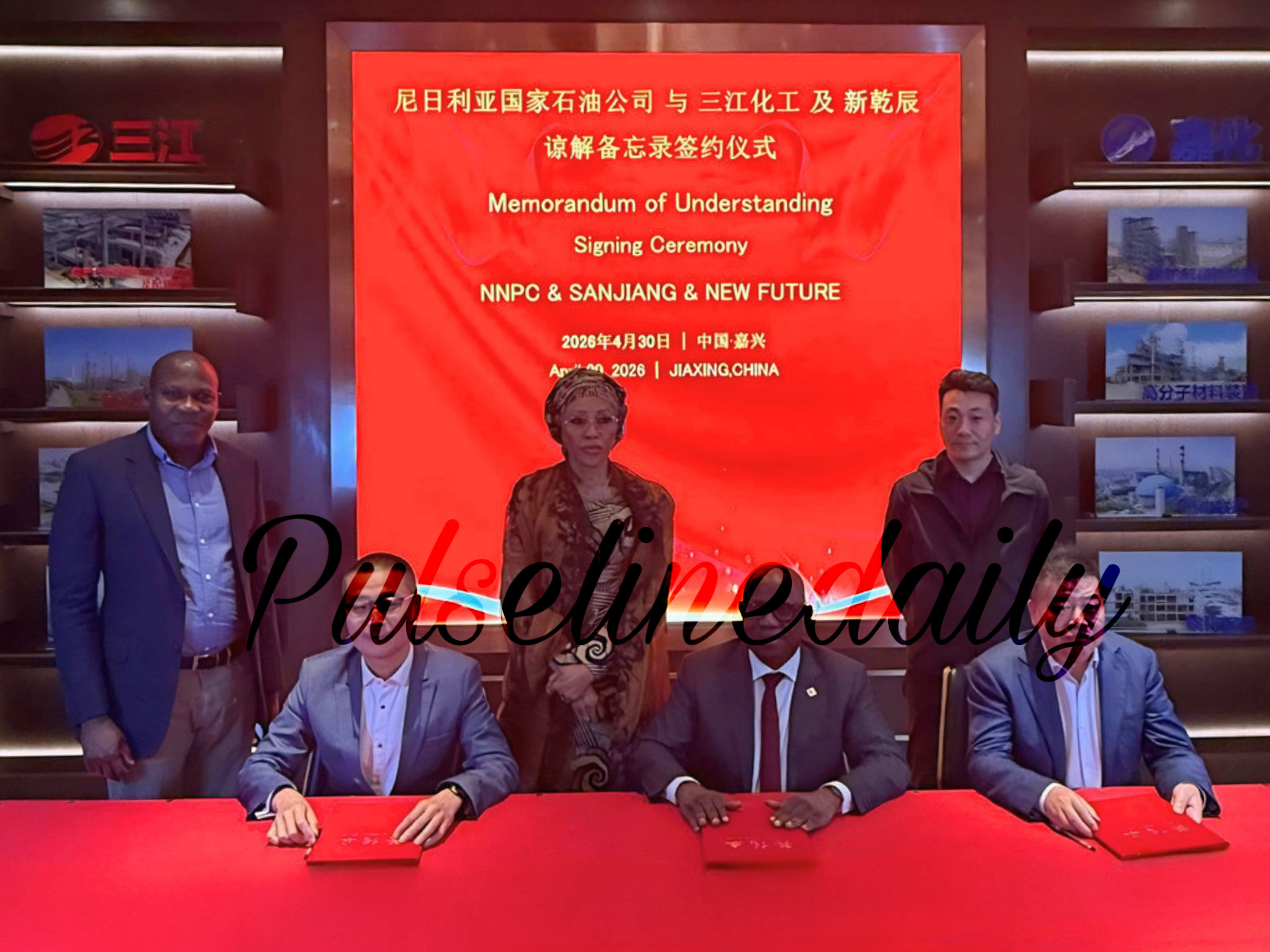
NNPC Limited has signed a Memorandum of Understanding with two Chinese companies Sanjiang Chemical Company Limited and Xinganchen (Fuzhou) Industrial Park Operation and Management Co. Ltd for a potential Technical Equity Partnership to complete, operate, and expand the Port Harcourt and Warri Refineries. The MoU was executed on April 30, 2026, in Jiaxing City, China, by NNPC Group CEO Engr. Bashir Bayo Ojulari alongside the chairmen of both Chinese firms. The deal goes beyond rehabilitation it envisions full scale operation, expansion into cleaner fuels, and the development of co-located gas based industrial hubs that could transform the two refinery complexes into integrated petrochemical centres. Any binding agreements remain subject to regulatory approvals and detailed commercial negotiations.
After decades of failed rehabilitation promises, billions of naira spent with little lasting result, and a most recent shutdown in May 2025 that exposed deep structural and financial rot, Nigeria’s state owned refineries have a new chapter opening this time with Chinese technical equity partners expected to bring not just expertise, but their own money.
NNPC Limited has signed a Memorandum of Understanding with Sanjiang Chemical Company Limited and Xinganchen (Fuzhou) Industrial Park Operation and Management Co. Ltd for collaboration through a potential Technical Equity Partnership in support of the completion and operation of the Port Harcourt and Warri Refineries. The agreement was executed in Jiaxing City, China, on April 30, 2026, by NNPC Group CEO Engr. Bashir Bayo Ojulari, alongside Sanjiang Chemical Chairman Guan Jianzhong and Xinganchen Chairman Bill Bi.
Ojulari described the MoU as the outcome of more than six months of intensive technical and commercial engagements between NNPC and the two Chinese firms. The signing, conducted in China rather than Nigeria, signals the seriousness of the engagement this was not a ceremonial handshake but a structured conclusion of months of due diligence between technical and management teams on both sides.
The scope of the collaboration is broad. The proposed framework covers completion of outstanding rehabilitation work at both refineries, operation and maintenance to achieve best in class sustainable performance, planned expansion and upgrades to cleaner and more profitable product standards, and the development of co-located gas based industrial hubs that could transform the Port Harcourt and Warri complexes into integrated energy and petrochemical centres. That final element industrial hubs built around the refinery infrastructure is the most ambitious dimension of the deal, one that could unlock significant downstream value from Nigeria’s gas reserves while supporting domestic manufacturing.
The NNPC boss stressed that the MoU represents a transition from traditional contractor led rehabilitation to a more performance driven partnership model anchored on shared risks and returns. “This is an important step on the journey towards identifying potential technical equity partner or partners to restart and expand NNPC’s refineries, and to explore opportunities in co-located petrochemicals and gas based industries,” Ojulari stated.
The Technical Equity model is the critical distinction between this agreement and everything that preceded it. Under this model, partners only benefit when the refineries perform optimally a performance linked return structure that directly addresses the fundamental failure of previous rehabilitation contracts, where billions were paid to contractors regardless of whether the refineries actually produced fuel.
Operations at the Warri and Port Harcourt refineries have remained largely inactive since May 24, 2025, when they were shut down for maintenance initially expected to last just 30 days. Subsequent technical and commercial reviews revealed deeper structural and financial challenges, and in February 2026, Ojulari disclosed that the refineries were operating at significant losses, prompting extended shutdowns to prevent further value erosion. The MoU is not yet binding and remains subject to further detailed negotiations and regulatory approvals a qualification NNPC has been careful to maintain throughout its communications about the deal.
Analysis
The NNPC-China MoU is significant but its significance lies entirely in how different it is from what came before, and the honest answer is: different enough to be worth watching, but not yet different enough to celebrate. Nigeria’s refinery rehabilitation history is one of the most expensive governance failures in the country’s post independence story. The Port Harcourt refinery alone absorbed over $1.5 billion in rehabilitation funds under previous NNPC leadership and still could not achieve sustained commercial operations. The Warri refinery has a similarly deflating record. What changed between those failures and this MoU is the model and the model matters enormously. The shift from contractor led rehabilitation to a technical equity partnership means the Chinese partners are expected to bring not just engineering expertise but also operational discipline and investment capacity, with their returns aligned to the performance of the refineries. That alignment of incentives is the single most important structural difference between this arrangement and its predecessors. A contractor who is paid upon completion of work has every incentive to complete the work and leave. A technical equity partner whose returns are tied to refinery output has every incentive to make the refinery actually run and keep running. The sceptic’s counter is equally well founded. Nigeria has signed MoUs about its refineries before. They have been announced with similar language about milestones and partnerships, and the refineries have remained silent. The distance between a signed MoU and a producing refinery is measured not in kilometres but in regulatory approvals, binding commercial agreements, financing closes, and sustained operational discipline. Each of those steps has broken down before. What is different this time is the institutional context. Ojulari’s NNPC has demonstrated, in its first year, a willingness to be transparent about failure including his own public admission that the refineries were running at losses when he arrived. That honesty, however uncomfortable, is the necessary precondition for the kind of structural intervention this MoU represents. A leadership team that tells the truth about what is broken is a leadership team that might actually fix it. Nigerians have every right to watch this development with cautious hope rather than cynical dismissal but also with the clear expectation that the binding agreement, when it comes, must deliver what the MoU promises.
Tags