Made in Nigeria, Built for War: Terra Industries Unveils Interceptor Drones, Mine Clearing Robots, and AI Battlefield Software in Historic Defence Tech Debut
Summary
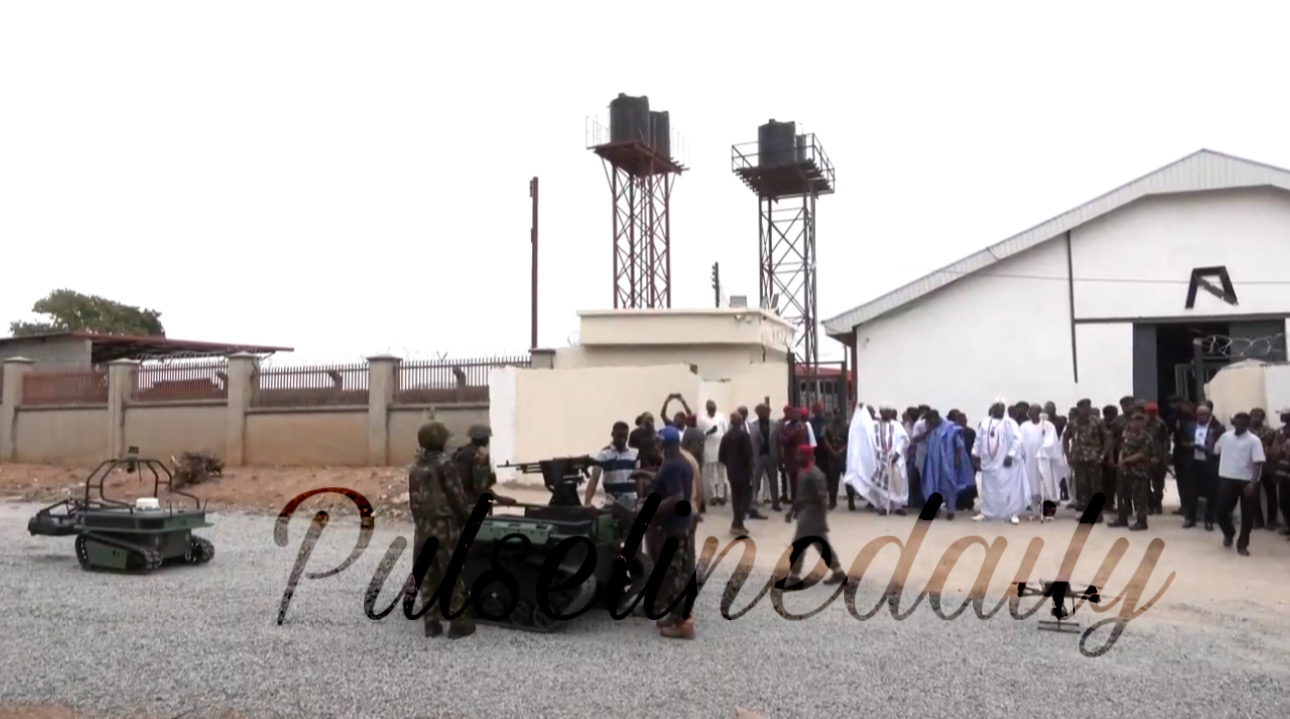
Nigerian Gen Z-founded defence technology startup Terra Industries on Monday, April 28, 2026, unveiled a suite of autonomous military systems at a demonstration in Abuja attended by senior military and government officials marking the company’s most consequential step yet in its mission to give Africa a homegrown technological edge in modern warfare. The systems presented include interceptor drones designed to neutralise hostile UAVs before they reach military targets, unmanned ground vehicles capable of detecting improvised explosive devices without exposing soldiers to danger, and a battlefield intelligence software platform that feeds real-time situational awareness data to military commanders. The unveiling has drawn significant national and international attention including Reuters coverage and positions Terra Industries as Africa’s most-funded defence technology startup, having raised approximately $34 million to date. Nigeria’s Defence Industries Corporation, DICON, has already entered a formal MoU with the company, with Major General Babatunde Alaya calling the collaboration “timely” given the rising toll of IED attacks on Nigerian troops.
On Monday morning in Abuja, something unprecedented happened in Nigeria’s security landscape: a homegrown, privately funded, Gen Z led technology company stood before the country’s most senior military officials and demonstrated autonomous weapons systems capable of countering the very threats that have been killing Nigerian soldiers for more than a decade. Nigeria backed startup Terra Industries launched drones and mine-clearing robots for the country’s military, aimed at fighting Islamic militants and reducing reliance on imported defence equipment.
Founded in 2024 by young entrepreneurs Nathan Nwachuku and Maxwell Maduka, Terra Industries initially focused on civilian drone applications, securing critical infrastructure such as oil facilities, mines, and power plants. The company says it currently protects assets valued at over $11 billion across Africa. That civilian foundation has now pivoted decisively toward defence and the scale and sophistication of what was unveiled on Monday suggests the pivot has been years in strategic preparation, even if the company itself is barely two years old.
What Was Unveiled: Three Systems, One Mission
Speaking at the unveiling, co-founder and CEO Nathan Nwachuku described the ambition plainly: “Today, we’re unveiling new defense systems such as our interceptor UAVs, mine detectors that can detect IEDs on the ground, and our battlefield intelligence software that will be able to automate military planning and operational systems. Beyond that, today is just the day where we show our readiness for battlefield operations and actual forward deployment onto the frontlines.”
Each system addresses a specific and documented vulnerability in Nigeria’s counter insurgency operations. The interceptor drones are built to identify and neutralise hostile unmanned aerial vehicles before they reach military targets. The threat they are designed to counter is not hypothetical militants affiliated with Boko Haram and ISWAP have increasingly deployed drones for both surveillance and strike missions in Nigeria’s northeast, forcing the military to develop counter-UAV capabilities that have previously been sourced entirely from abroad.
On the ground, the company’s unmanned mine-clearing vehicles function as minesweepers, using sensors and artificial intelligence to detect hidden explosives without exposing soldiers to danger. IEDs improvised explosive devices have been among the most lethal weapons in the insurgent arsenal for over a decade, responsible for a significant proportion of Nigerian military casualties in Borno, Yobe, and surrounding states. The battlefield intelligence platform combines data from both aerial and ground systems, giving military commanders real time situational awareness and helping them make faster, more informed decisions during operations.
Terra sells its defence hardware bundled with its proprietary ArtemisOS software on a recurring-fee basis a subscription model that mirrors the commercial approach adopted by leading global defence-tech firms and ensures that Terra maintains a sustained revenue relationship with its customers rather than a one-time equipment sale.
DICON Partnership and Military Endorsement
The strongest signal of the unveiling’s credibility came not from the technology itself, but from who showed up to witness it and what they said. Major General Babatunde Alaya, who leads the Defence Industries Corporation of Nigeria, said collaboration with domestic firms is increasingly necessary due to rising battlefield risks faced by troops. He described the collaboration with Terra Industries as timely, especially given the rising number of casualties linked to IED attacks.
DICON signed a memorandum of understanding with Terra Industries in February 2026 to establish a joint venture a formal institutional commitment that gives Terra access to DICON’s manufacturing ecosystem and government procurement channels, and gives DICON access to Terra’s innovation pipeline. The partnership is significant: DICON is the Nigerian state’s primary vehicle for domestic defence manufacturing, and its formal embrace of a private sector startup as a development partner marks a shift in how Nigeria’s defence establishment thinks about procurement and capability development.
The Funding Story: Africa’s Most-Backed Defence-Tech Startup
Terra Industries’ unveiling is backed by a financial trajectory that has attracted global attention. The company has raised $34 million across two funding rounds in 2026, making it the most-funded defence technology startup on the African continent. Its rapid rise has included a $22 million raise in February 2026 one of the largest single funding rounds ever recorded for an African defence-technology company. That capital has been deployed with notable speed: into manufacturing infrastructure, into the DICON partnership, and into the research and development pipeline that produced the systems unveiled on Monday.
The company is also building what it describes as Africa’s largest drone manufacturing facility in Accra, Ghana. The 34,000 square foot Pax 2 plant is in its final construction phase and is expected to be fully operational by the end of June 2026, producing three aerial platforms including the Kama interceptor. The decision to locate a major manufacturing facility in Ghana rather than exclusively in Nigeria reflects both the regional ambition of Terra’s mission and the practical reality of operating in a West African security environment that is deteriorating across multiple national borders simultaneously.
Why This Matters: Nigeria’s Defence Import Dependency
The launch reflects a growing effort by Nigeria to reduce dependence on imported military hardware and build domestic defence manufacturing capacity, after years of buying aircraft, armoured vehicles, and surveillance systems from countries including China, Turkey, Pakistan, and the United States. Procurement delays, maintenance bottlenecks, and rising foreign exchange costs have strengthened the case for local production.
Nigeria has battled insurgency in its northeast for more than 17 years, with groups including Boko Haram and cells linked to Islamic State and al-Qaeda intensifying attacks on army positions. Militants have stepped up operations using IEDs and drones, forcing the military to invest in counter-drone systems, electronic warfare, and autonomous ground equipment. The gap between the threat’s evolution and Nigeria’s response has been partly a function of procurement timelines ordering systems from overseas can take years, and by the time equipment arrives, the tactical environment has often shifted again. A domestic supplier capable of iterating rapidly and deploying within Nigeria’s own procurement framework changes that dynamic fundamentally.
Beyond the battlefield, there is also a potential economic upside. If successful, these systems could position Nigeria as a supplier of defence technology to other African countries facing similar security challenges from Mali to Mozambique, where armed groups have created demand for exactly the kind of lightweight, AI enabled autonomous systems Terra is developing.
Analysis
Terra Industries’ Abuja unveiling is one of those moments that looks, on first encounter, like a technology story drones, robots, software but is in fact something considerably more important: a story about sovereignty, about the limits of import dependency, and about what happens when a generation of young Nigerians trained in engineering and computer science decides to apply those skills not to fintech or e-commerce but to the oldest and most urgent challenge their country faces. For more than 17 years, Nigeria’s military has fought a war against insurgents who have consistently outpaced the state’s capacity to respond technologically. Boko Haram and ISWAP began as a movement and evolved into a force capable of deploying drones, constructing sophisticated IEDs, and conducting coordinated multi front attacks against military installations. The Nigerian military, equipped largely with weapons platforms designed for a different era and a different kind of threat, has absorbed enormous casualties in the process. The human cost of that technological gap is measured in the lives of soldiers, and in the communities that have been repeatedly overrun because the state could not respond quickly enough. Terra’s interceptor drones and mine clearing ground vehicles are direct answers to the two most lethal tactical instruments in the insurgent toolkit. Their battlefield intelligence software aggregating real time data from aerial and ground systems and feeding it to commanders addresses the situational awareness deficit that has made it difficult for Nigerian forces to respond effectively to fast-moving threats in difficult terrain. If these systems perform in the field as they performed in Monday’s demonstration, they could meaningfully shift the operational balance in Nigeria’s northeast. But demonstration days and battlefield deployment are very different things. The Nigerian military will need to integrate these systems into existing operational frameworks, train personnel to operate and maintain them, and establish the supply chains and technical support infrastructure that prevent even the most capable platforms from becoming expensive paperweights once they are in the field. Major General Alaya’s endorsement of DICON’s partnership with Terra is encouraging it suggests that the institutional infrastructure for absorption and integration is being thought through. But the proof will come when the first interceptor drone is deployed on a live mission in Borno State, and when the first mine-clearing vehicle saves the first soldier’s life. What is already beyond dispute is what Terra Industries represents culturally and economically. A two-year-old company, founded by young Nigerians, that has raised $34 million, built Africa’s largest drone factory, and secured a formal joint venture with the state’s primary defence manufacturer before its third birthday this is a story about what Nigeria’s innovation ecosystem can produce when capital, talent, and national urgency align. The defence tech frontier is one of the most difficult markets in the world to enter and succeed in. Terra is entering it anyway, with a confidence that reflects both the scale of the problem they are trying to solve and the quality of the team they have assembled to solve it.
Tags