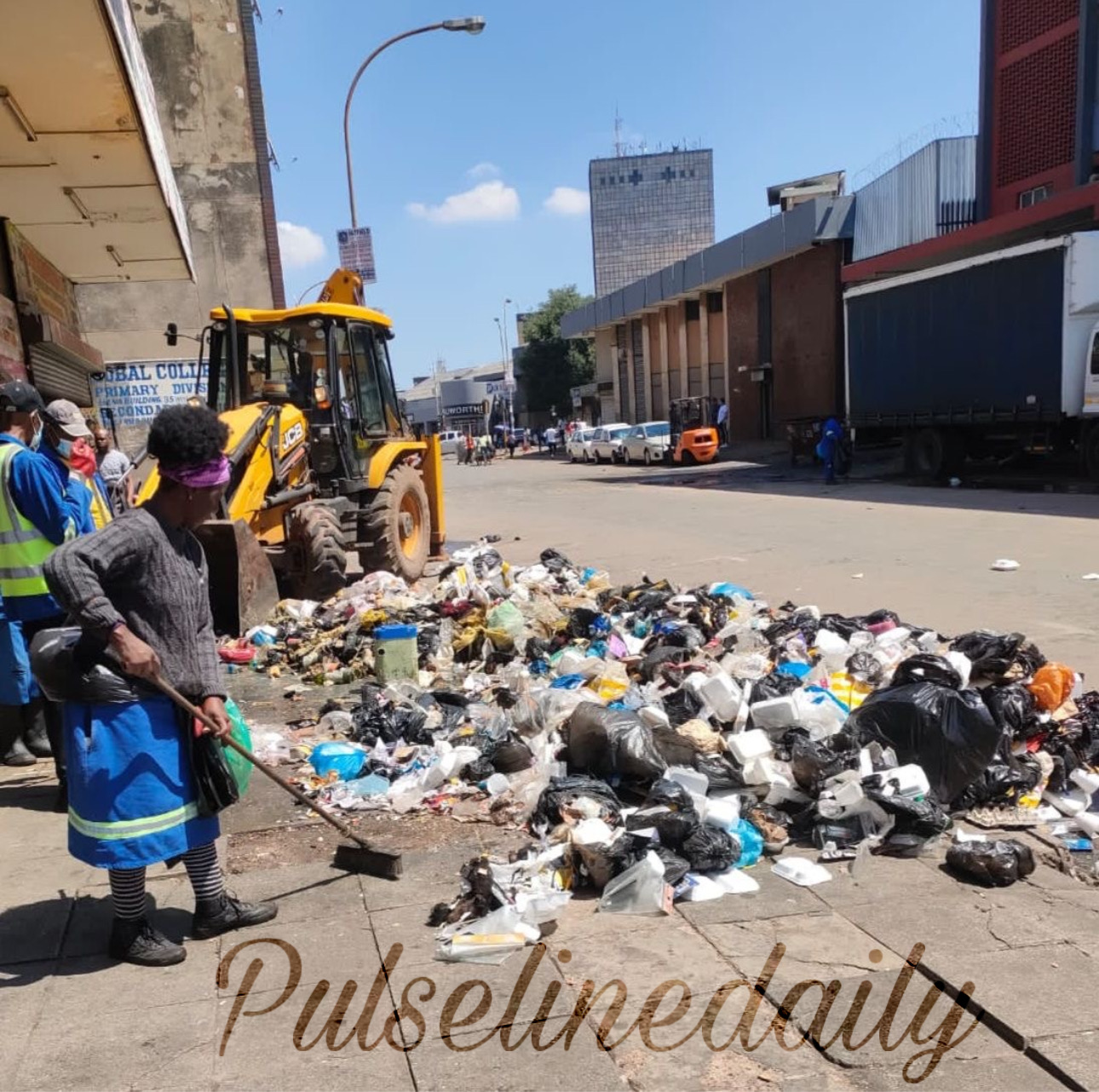
Lagos Streets Fall Silent as Reintroduced Monthly Sanitation Exercise Returns
Summary
For the first time in nearly a decade, Lagos came to a standstill on Saturday morning, April 25, 2026, as the state government’s reintroduced monthly environmental sanitation exercise went into effect bringing controlled movement restrictions, enforcement teams, and a renewed push to make cleanliness a collective civic duty across Nigeria’s most populous city.
Lagos woke up differently on Saturday morning. By 6:30 a.m., the streets that typically hum with early commercial activity had gone quiet no danfo buses weaving through traffic, no roadside hawkers setting up stalls. For two hours, the city paused to clean itself.
The Lagos Waste Management Authority (LAWMA) had urged residents ahead of the exercise to comply with the reintroduced monthly environmental sanitation programme, confirming it would take place statewide between 6:30 a.m. and 8:30 a.m. on Saturday, April 25, 2026 the last Saturday of the month. LAWMA emphasised that the two-hour window was dedicated to residents cleaning their surroundings and ensuring proper waste disposal as part of broader efforts to maintain environmental hygiene across the state.
The return of the exercise marks the end of a nearly ten-year absence. The initiative, previously held between 7:00 a.m. and 10:00 a.m., was suspended in November 2016 following a court ruling that restricted the enforcement of movement limitations during the exercise. Its revival has been in the works since early 2026.
Lagos State Governor Babajide Sanwo-Olu formally announced the reintroduction during a symbolic flag-off held along the Mushin Agege Motor Road corridor on March 14, 2026, declaring that the exercise would be held on the last Saturday of each month and monitored by state officials, with sanctions imposed on offenders. He stated that the culture of environmental responsibility must become deeply embedded in the lifestyles of residents and communities across the state.
Commissioner for Environment and Water Resources Tokunbo Wahab confirmed that during the exercise, there would be controlled movement across the state to allow residents to carry out thorough cleaning of their homes, surroundings, and drainage frontages. Enforcement teams comprising officials from the Ministry of Environment, the Lagos State Environmental Protection Agency (LASEPA), Kick Against Indiscipline (KAI), LAWMA, and local government sanitation inspectors were deployed to conduct physical inspections during and after the sanitation window. Defaulters face sanctions under the Lagos State Environmental Management and Protection Law of 2017.
LAWMA intervention trucks were also deployed across the state to cart away bagged waste generated during the exercise. The government additionally announced rewards for the cleanest Local Government Area, Local Council Development Area, and the cleanest street, as part of efforts to encourage healthy competition and community participation.
To underscore the seriousness of the exercise, top government officials led by First Lady Claudiana Sanwo-Olu, supported by the Committee of Wives of Lagos State Officials (COWLSO), were out to monitor compliance across communities.
Residents have had mixed reactions. Many Lagosians welcomed the move, saying it will help curb indiscriminate waste disposal, reduce flooding, and restore cleanliness across the state. However, some residents raised concerns about enforcement, warning that movement restrictions could be misused by security personnel and calling for sustained public education on proper waste management practices, noting that long-term behavioural change must complement the monthly exercise.
Governor Sanwo-Olu acknowledged the scale of the challenge, noting that in a city as large and dynamic as Lagos, maintaining a clean and healthy environment must remain a collective civic duty shared by all residents and that the government alone cannot keep Lagos clean.
Analysis
The return of Lagos’s monthly sanitation exercise is more than a public health initiative it is a signal that the Sanwo-Olu administration is reaching back into the city’s civic memory to rebuild habits that urban growth and political neglect had allowed to erode. At its peak in earlier decades, the monthly sanitation was a defining feature of life in Lagos. It was the kind of routine that shaped how residents related to their surroundings and each other a shared inconvenience that produced a shared outcome. Its suspension in 2016, while legally justified by a court ruling, created a vacuum that the city’s waste management system was never quite able to fill on its own. The visible consequences clogged drains, refuse-lined roadsides, seasonal flooding that paralyses major roads have been a persistent embarrassment for a city that aspires to be West Africa’s premier commercial hub. The decision to revive the exercise with a slightly compressed two hours window, rather than the original three hours, reflects a government that is conscious of the economic cost of immobility in a city where many people’s livelihoods depend on being out early. The incentive structure rewards for the cleanest LGA, LCDA, and street is a smart addition that attempts to gamify compliance and inject a competitive spirit into what might otherwise feel like an obligation. These are design improvements over the original model. The harder challenge is sustainability. Monthly exercises succeed when they are backed by daily infrastructure: functional waste bins, responsive collection schedules, and drainage systems that don’t collapse under heavy rain. Without those foundations, even the most enthusiastic community cleanup risks becoming symbolic residents tidying up only to watch the environment deteriorate again within days. The government’s pledge to strengthen drainage infrastructure and improve waste management systems will be the true measure of whether April 25, 2026 was the beginning of something lasting, or simply a well-photographed morning. For now, Lagos has shown it can be quiet when it wants to be. The question is whether that quiet can become clean.
Tags