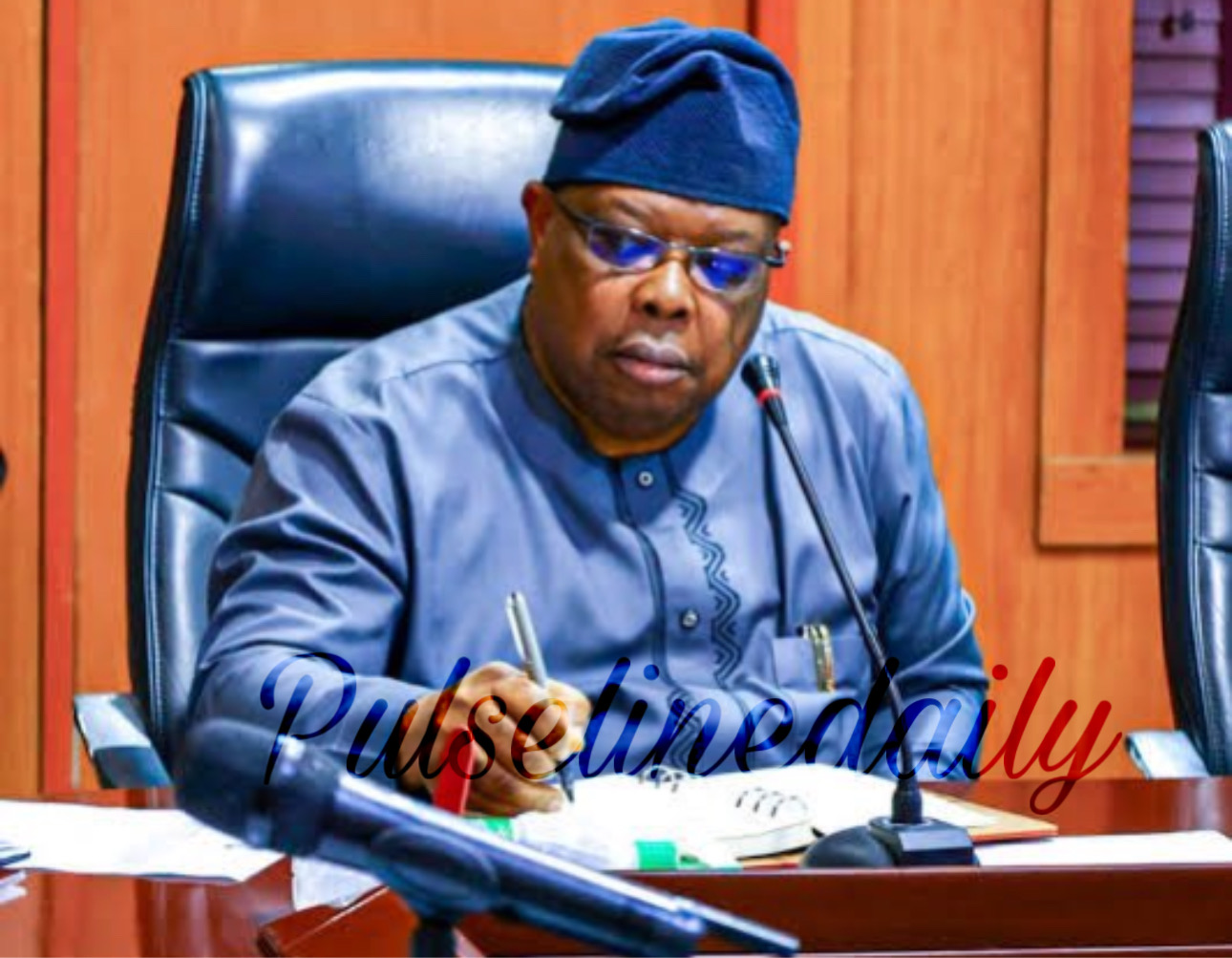
KPMG Veteran, China Envoy, Power Reformer: Tinubu Nominates Joseph Olasunkanmi Tegbe as Minister of Power to Succeed Adelabu
Summary
President Bola Ahmed Tinubu has nominated Mr. Joseph Olasunkanmi Tegbe, a fiscal and economic reform expert with over 35 years of experience, as Minister of Power subject to Senate confirmation. The nomination, announced Thursday April 30, 2026 through Presidential spokesman Bayo Onanuga, follows the resignation of former Minister Adebayo Adelabu, who stepped down to contest the 2027 Oyo State governorship election. Tegbe, also from Oyo State, is a former Senior Partner and Head of Advisory Services at KPMG Africa and currently serves as Director General and Global Liaison for the Nigeria-China Strategic Partnership. He brings prior regulatory experience with both NERC and NBET agencies central to Nigeria’s electricity market reform and his nomination has been transmitted to the Senate for screening and confirmation in accordance with the Constitution.
Nigeria’s perpetually troubled power sector has a new minister in waiting and the profile President Tinubu has chosen to fill the vacancy left by the departure of Adebayo Adelabu is one that prioritises institutional reform, regulatory expertise, and private sector investment attraction over political patronage.
President Bola Ahmed Tinubu has nominated Mr. Joseph Olasunkanmi Tegbe as Minister of Power, subject to confirmation by the Senate. The nomination has been transmitted to the Senate for screening and confirmation in accordance with the Constitution.
The nomination follows the resignation of the former Minister, Adebayo Adelabu, who stepped down from office to pursue elective office. Adelabu, who served as Minister of Power since the Tinubu administration began in May 2023, has declared his intention to contest the Oyo State governorship election ahead of 2027 making him the latest of President Tinubu’s ministers to depart for electoral politics.
Like his predecessor, Tegbe is also from Oyo State a continuity in state representation that reflects the administration’s sensitivity to geopolitical balancing within the federal cabinet.
Who Is Joseph Tegbe?
Mr. Tegbe, from Oyo State, is a fiscal and economic reform expert with over 35 years of experience spanning the public and private sectors. He is a former Senior Partner and Head of Advisory Services at KPMG Africa, where he led wide ranging initiatives in fiscal policy reform, institutional transformation, and governance. He has also advised key government institutions and private sector organisations on strategic reforms, regulatory frameworks, and investment structuring.
His most recent appointment positions him at the intersection of two of Nigeria’s most strategically significant bilateral relationships. He is at present the Director General and Global Liaison for the Nigeria-China Strategic Partnership, where he is responsible for strengthening bilateral development cooperation between Nigeria and the People’s Republic of China. The NCSP also coordinates engagements with public sector stakeholders to advance economic and social development in line with FOCAC objectives. China’s role as a major funder of Nigerian infrastructure including power generation, transmission, and distribution projects makes that experience directly relevant to the portfolio he has now been nominated to lead.
Mr. Tegbe’s experience includes significant engagements within the power sector, particularly in regulatory and institutional reform involving agencies such as the Nigerian Electricity Regulatory Commission and the Nigerian Bulk Electricity Trading Company. NERC is the sector’s primary regulator, responsible for licensing, tariff setting, and enforcing market rules. NBET is the government owned entity that sits at the centre of Nigeria’s electricity market as the bulk purchaser and reseller of power and has been at the heart of the sector’s liquidity crisis for years. A nominee who has worked in the reform space around both institutions brings a level of sector specific depth that his predecessor, a politician, was not credited with.
Tegbe’s nomination comes at a time of increased interest in the country’s power sector amid calls for improvement in power supply across Nigeria. In recent years, the country has experienced incessant grid collapses, raising concerns over the availability of power supply.
His nomination is expected to strengthen ongoing efforts to reform the power sector, enhance grid stability, and attract sustainable investment in line with the Renewed Hope Agenda. The President expects the Minister Designate, upon confirmation, to bring his extensive expertise to bear to advance critical reforms and deliver improved outcomes for Nigerians in the power sector.
Analysis
The nomination of Joseph Tegbe to the Power Ministry arrives at a moment when Nigeria’s electricity sector is, simultaneously, the country’s most important economic constraint and its most consequential unrealised opportunity. The sector’s problems are well mapped: a generation capacity that falls short of demand, a transmission grid that collapses with alarming regularity, a distribution infrastructure that loses up to 40% of the power it receives, a commercial framework in which electricity is sold below cost recovery, and a market liquidity crisis that has left generation companies owed hundreds of billions of naira by distribution companies that cannot collect their receivables from consumers. What Nigeria’s power sector has historically needed and rarely received is a minister who understands the regulatory and institutional architecture of the electricity market deeply enough to engage with its structural contradictions rather than simply managing its political symptoms. Adelabu, for all his energy, was a political figure operating in a technical space. Tegbe’s background at KPMG Africa, where complex institutional reform advisory work is the primary product, and his prior engagement with NERC and NBET suggest a different profile one more aligned with the reform engineer than the political manager. The China dimension of his background is equally worth watching. Nigeria’s most significant power infrastructure investments in recent years including the Zungeru Hydroelectric Power Plant and multiple transmission line projects have been financed and built by Chinese entities. A minister who has spent time deepening the Nigeria-China strategic partnership arrives at the Power Ministry with established relationships in Beijing that could accelerate the execution of pipeline projects and the negotiation of new energy investment frameworks. That is not a small asset in a sector that is chronically underfunded and dependent on external capital. The Senate confirmation process will test how much scrutiny Tegbe’s nomination receives. Nigerians watching from the outside should be asking the right questions: What is his specific diagnosis of the sector’s liquidity crisis? What is his position on the current tariff structure and the path to cost reflective pricing? What does he believe the role of DisCos, GenCos, and NBET should be in a reformed market? The answers to those questions will determine whether his KPMG and NCSP experience translates into a Power Ministry that finally moves the needle or whether Nigeria’s most intractable sector finds itself, once again, managed rather than transformed.
Tags