“I’m a Stubborn Politician. I Just Refuse to Go”: Tinubu Declares 2027 Second-Term Bid, Dismisses Insecurity as Political Weapon Against His Presidency
Summary
President Bola Ahmed Tinubu has formally declared his intention to seek a second term in the 2027 presidential election, using a blunt and combative address at the Presidential Villa in Abuja to rebuff critics who have called for his resignation over Nigeria’s deteriorating security situation. Speaking while receiving Governor Caleb Mutfwang and Plateau State stakeholders on Tuesday night a state that has been ravaged by repeated attacks on farming communities Tinubu accused unnamed “enemies” of weaponising insecurity to drive him out of office, describing himself as “a very stubborn politician” who will not be moved. The declaration coincides with the formal purchase of the APC’s ₦100 million presidential nomination form by his ally James Faleke, and comes against a backdrop of rising opposition, a coalition of rival parties preparing a unified 2027 challenge, a deeply divided public response, and sharp criticism from clerics including Apostle Johnson Suleman.
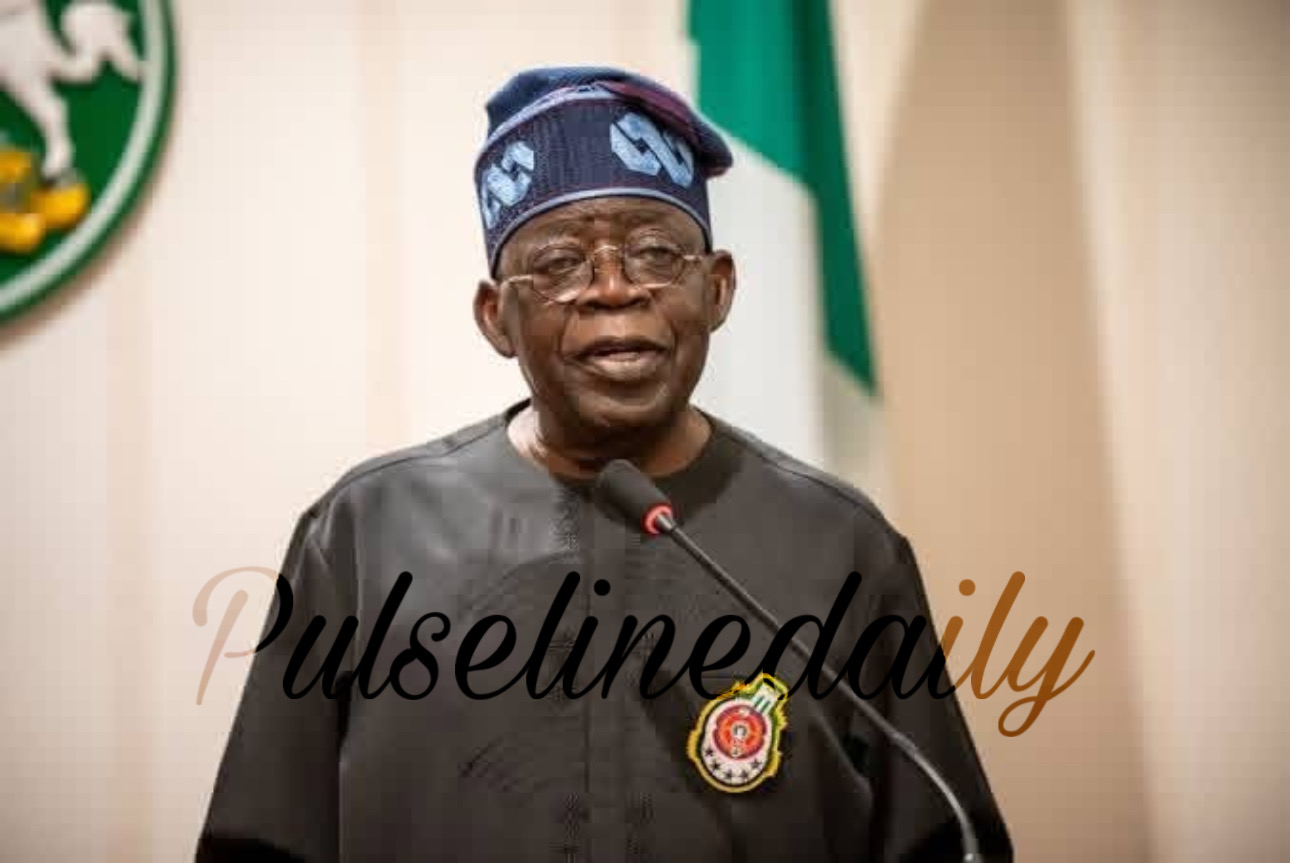
In a moment that stripped away whatever ambiguity remained about his political intentions, President Bola Tinubu declared himself a second-term candidate before an audience of Plateau State stakeholders at the Presidential Villa in Abuja on Tuesday night and did so in language that was uncharacteristically raw, combative, and personal.
“You are playing to the hand of agents, including my own enemies, who want to use insecurity to get rid of me. But I’m a very stubborn politician. I just refuse to go. And I will campaign for my second term,” the president said. The remarks, delivered at a meeting convened to discuss the persistent crisis of violence on Plateau State’s Berom Plateau, framed Nigeria’s security catastrophe in which thousands of lives have been lost to farmer herders conflicts, banditry, and insurgency as a political conspiracy against his presidency rather than a governance failure demanding urgent remediation.
Tinubu made the remarks while receiving Governor Caleb Manasseh Mutfwang and other stakeholders from Plateau State, explaining that those attempting to use the country’s security challenges against his administration were aiding the agenda of his political opponents and hostile forces. He did not name the “enemies” he accused of weaponising insecurity, but the implication was clear: that critics calling for stronger government action on violence or for his resignation were doing so in bad faith, in service of a political agenda designed to unseat him before 2027.
The president also addressed the security crisis directly, pledging governmental action against identified instigators. “If you identify and you know the name of troublemakers, agents or provocateurs who want to continue killing or instigate killing, let us know. We will use the instrument of office to deal with them,” he said. The conditional framing “once those instigating the violence are identified” has drawn criticism from security analysts who argue that after nearly three years in office, the Federal Government should be identifying those actors rather than asking the public to do so.
The APC Nomination Form: Making It Official
Words at a stakeholder meeting are one thing. A ₦100 million nomination form is another. The presidential nomination forms were purchased on the president’s behalf by James Faleke, the member representing Ikeja Federal Constituency the same Faleke who has been a close Tinubu ally since the Lagos political era. The APC had fixed May 23, 2026 for its presidential primary election, having shifted from earlier dates of May 15 and May 26. The purchase of the form places Tinubu formally on the path to seeking the APC’s presidential ticket the first step in what promises to be Nigeria’s most fiercely contested election cycle since the return to democracy.
Tinubu is running for a second term amidst mounting opposition, a biting economy, and worsening insecurity. Major opposition parties have announced plans to form a coalition to support a single presidential candidate to challenge him an opposition unity arrangement that, if it holds, would represent a fundamentally different electoral challenge from the fragmented field he defeated in 2023.
The Critics: From Clerics to Civil Society
The public response to Tinubu’s second-term declaration has been sharply divided and the sharpest voices against it have come from unexpected quarters. Apostle Johnson Suleman, senior pastor and general overseer of Omega Fire Ministries International, delivered a pointed rebuttal during a Sunday service in Auchi, Edo State, questioning what justification Tinubu could offer for another term given worsening economic pressures and persistent insecurity.
Suleman’s challenge was direct: “Get one thing right. Nigerians are not asking for too much. If you can’t get power, give us security. If you can’t provide security, let us buy things cheaply. Just do one thing right.” The sermon which went viral captured a sentiment that polling data and street level commentary have consistently reflected: that for millions of Nigerians, the Tinubu administration’s most consequential failures are not technical or bureaucratic but existential, touching daily life in ways that make re-election arguments difficult to absorb.
The cleric also raised the question of emigration of Nigerians leaving not for wealth but for safety, including medical professionals who are driving taxis abroad because they cannot work safely at home. It is an argument that goes beyond partisanship into the realm of national dignity.
Civil society groups and opposition commentators have also been pointed. Critics have noted that Tinubu did not complete two years in office before commencing his second-term campaign, with campaign posters flooding strategic locations in Abuja and Lagos well before INEC made any pronouncement on the 2027 election timeline.
The Supporters: APC Governors and Allies Close Ranks
The president’s political infrastructure has been mobilising in parallel. Ahead of the 2027 presidential election, governors, elders of the ruling APC, and political heavyweights in several states have endorsed Tinubu for a second term a show of party solidarity that reflects both genuine support and the institutional logic of incumbency, which gives a sitting president enormous leverage over the party machinery.
Rivers State Governor Siminalayi Fubara, speaking at the Southern Traditional Rulers Council meeting in Port Harcourt, expressed confidence in Tinubu’s administration, saying Nigeria is on a stable trajectory and cautioning that “it is not ideal to change the goalpost in the middle of the game.” Fubara’s endorsement carries particular weight given the political history between himself and the Tinubu camp making his backing a signal of broader reconciliation within the ruling establishment.
Analysis
Tinubu’s declaration that he is “a stubborn politician” who “refuses to go” is politically revealing in ways that may not have been fully intended. The language of stubbornness and refusal is the language of a man responding to pressure genuine, sustained, and coming from multiple directions simultaneously. A president entirely confident in his record and his standing with the electorate does not need to frame his re-election bid in terms of defiance. He frames it in terms of continuity, achievement, and vision. The combative register Tinubu chose on Tuesday night tells the story of a political environment that feels threatening, not comfortable. The framing of insecurity as a political weapon deployed by enemies is the most troubling aspect of Tuesday’s remarks not because it is entirely without foundation, but because it displaces responsibility. Plateau State has buried hundreds of people in mass graves over the past three years. Borno and Zamfara communities continue to be attacked, displaced, and terrorised with a frequency that barely registers in national headlines anymore. Whatever the political motivations of Tinubu’s critics, the insecurity they are criticising is real, its victims are real, and the families of those killed are not playing politics. Characterising their anguish as a tool of enemies is an affront to the communities experiencing it. The opposition coalition forming against Tinubu represents a structural shift in the 2027 electoral landscape that cannot be dismissed. In 2023, Tinubu won a three way race in which the opposition vote was split between the PDP’s Atiku Abubakar and the Labour Party’s Peter Obi. If that vote consolidates behind a single candidate in 2027, the mathematical reality of the election changes substantially even before accounting for the economic disillusionment, security anxiety, and cost-of-living pressures that have accumulated under three years of Tinubu’s administration. The APC primary on May 23 will formalize Tinubu’s candidacy, but the real contest is already underway. Nigeria’s 2027 election will be a referendum on whether a majority of its voters believe the country is, on balance, better governed than it was in May 2023. The answer to that question, on the evidence currently available, is a long way from settled.
Tags