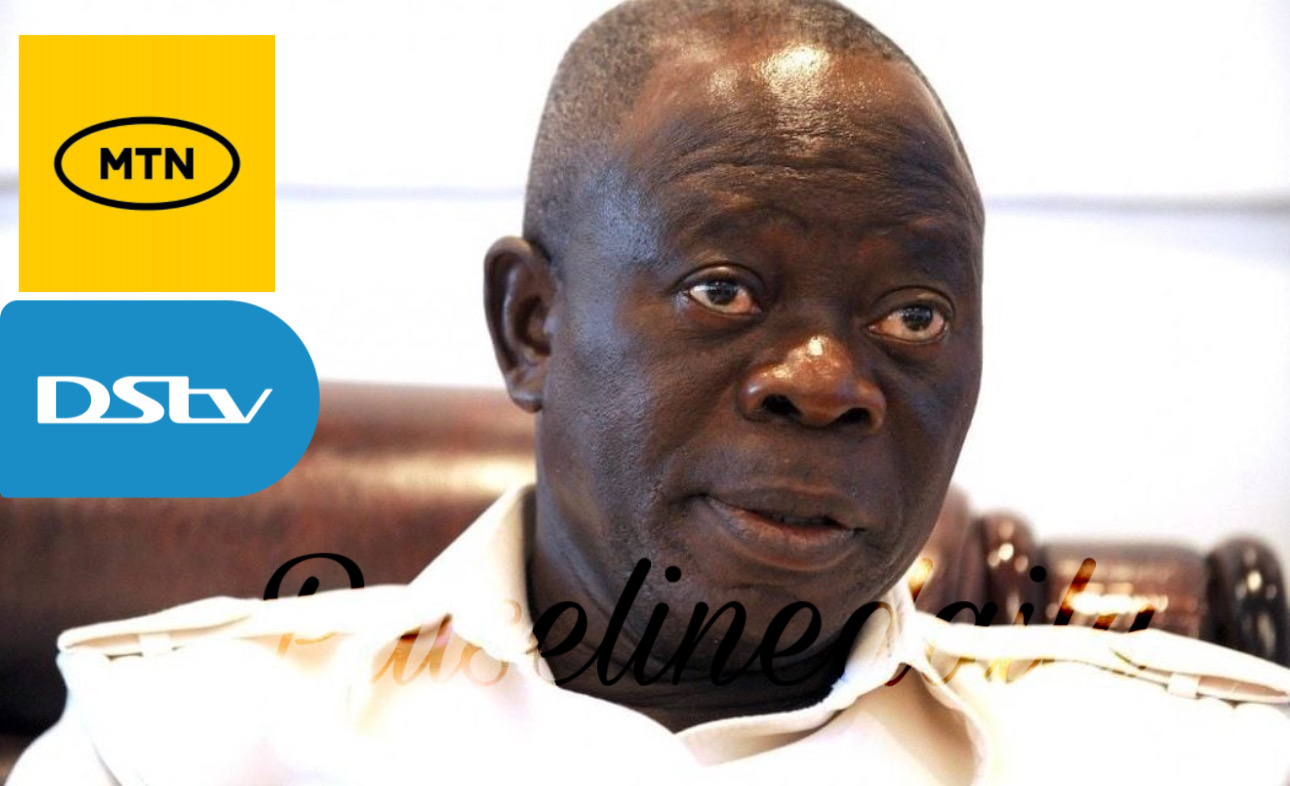
“If You Hit Me, I’ll Hit You”: Oshiomhole Calls for Revocation of MTN and DSTV Licences as Senate Confronts Renewed Xenophobic Attacks on Nigerians in South Africa
Summary
Senator Adams Oshiomhole, representing Edo North, sparked one of the most charged Senate debates of 2026 on Tuesday, May 5, calling for Nigeria to nationalise MTN, revoke DSTV’s operating licence, and adopt firm economic retaliation against South Africa following renewed xenophobic attacks on Nigerian nationals. Speaking during plenary, Oshiomhole invoked the diplomatic principle of reciprocity, arguing that tears and condemnations alone would not protect Nigerians abroad. His proposal was ultimately declined on procedural grounds, with the Senate President favouring diplomatic engagement. The Senate resolved to constitute a joint ad hoc committee with the House of Representatives to address the crisis, while the House separately condemned the attacks and mandated its Committee on Foreign Affairs to establish a 24 hours emergency response desk and legal aid fund in Pretoria.
Senator Adams Oshiomhole, representing Edo North Senatorial District, called for the revocation of operational licences of South African companies, including MTN and DSTV, following renewed xenophobic attacks against Nigerians. He made the proposal on Tuesday, May 4, 2026, as the Upper Chamber resolved to constitute a joint ad hoc committee of the Senate and the House of Representatives to address the rising cases of xenophobic attacks against Nigerian nationals in South Africa.
The former Edo State governor and former APC National Chairman did not arrive at the debate in a conciliatory mood. “I don’t want this Senate to be shedding tears, to sympathise with those who have died. We didn’t come here to share tears. If you hit me, I’ll hit you. I think it is appropriate in diplomacy. It’s an economic struggle,” he said.
Oshiomhole proposed that Nigeria should nationalise MTN and withdraw its operating licence, arguing that the company remits significant revenue out of the country while Nigerians face hostility abroad. “This Senate should adopt a position that MTN, a South African company that is cutting away millions of dollars from Nigeria every day that Nigeria nationalise it and withdraw its licence,” he said. He extended the same call to MultiChoice, operators of DSTV. “I call on the Federal Government to revoke DSTV, which is also a South African company that is carting away millions of dollars,” he said, advocating for increased indigenous participation to fill the void left by any exit of South African companies.
“By the time we withdraw MTN’s licence and revoke DSTV’s licence, those workers from South Africa will have good jobs to do. Let South Africa continue with their jobs. I believe there will be sanity,” he said, adding that “when we hit back, the president of South Africa will go on his knees to recognise that Nigerians cannot be intimidated.”
Also speaking, Senator Victor Umeh described the situation as alarming, warning that Nigerians were living in fear in South Africa. “It is worrisome. They are hiding for their lives. They can’t move freely. This is a situation where people are paying good with evil,” he said, referencing Nigeria’s historical support for the anti-apartheid struggle. Umeh called on the African Union to intervene and impose sanctions. Senator Abdul Ningi went further, warning that Nigeria had options: “If these things continue, we have alternatives. We know where South Africans are, not only in Nigeria but all over Africa, and we can take this fight to their territory.”
Senator Adamu Aliero urged caution, stressing the need for diplomacy. “In international relations, there is what we call the rule of reciprocity. Nigeria has done a lot for South Africa and we demand a lot also from South Africa by making sure that Nigerians living there conduct their business freely and fairly without any intimidation,” he submitted.
Oshiomhole’s proposal to revoke the operational licences of MTN and DSTV was ultimately declined on procedural grounds, with the Senate President emphasising diplomatic engagement as the preferred path and stating that economic retaliation against businesses would not be the preferred course of action. In its resolutions, the Senate urged the Federal Government to initiate high level diplomatic dialogue with South Africa and Ghana, called for a full and independent investigation into all reported incidents, and pressed for strong regional enforcement within ECOWAS and the African Union to deter xenophobia through diplomatic and legal action.
The Senate also observed a minute of silence in honour of Nigerians who have lost their lives in the attacks in South Africa.
Analysis
Oshiomhole’s call to revoke MTN and DSTV’s licences is the loudest version of an argument Nigeria has been having with itself since the first major xenophobic crisis of 2008 and it deserves to be taken seriously even where it is procedurally or economically uncomfortable. The principle he is invoking reciprocity is not fringe. It is a cornerstone of international relations, and it is the basis on which states have historically calibrated their responses to the mistreatment of their nationals abroad. The question is not whether Nigeria has the legal and sovereign right to revoke the licences of South African companies operating on its soil. It clearly does. The question is whether doing so would produce the outcome Oshiomhole intends a chastened South African government that protects Nigerian nationals or whether it would produce a different set of consequences: regulatory uncertainty that rattles foreign investors more broadly, disruption to Nigeria’s telecom and pay television markets that harms ordinary consumers, and a diplomatic escalation that gives South Africa’s government a new narrative about Nigerian aggression. MTN Nigeria is one of the largest taxpayers and employers in Nigeria’s private sector, and MultiChoice employs thousands of Nigerians directly and indirectly. Revoking their licences would hurt Nigerian workers and consumers at least as much as it would hurt South African shareholders a complexity that Oshiomhole’s formulation does not fully account for. None of this means Nigeria should be passive. The deaths of its nationals on South African soil demand a response that goes beyond a minute of silence and a diplomatic note. The joint ad hoc committee, the AU sanctions push, the emergency desk in Pretoria, and the legal aid fund are the right institutional responses but they must be matched by a seriousness of follow through that Nigeria’s legislative responses to previous xenophobic crises have not always demonstrated. Oshiomhole’s anger is legitimate. The question for Nigeria’s government and legislature now is how to translate that anger into outcomes that actually protect Nigerians, rather than just expressing it loudly enough to feel like action.
Tags