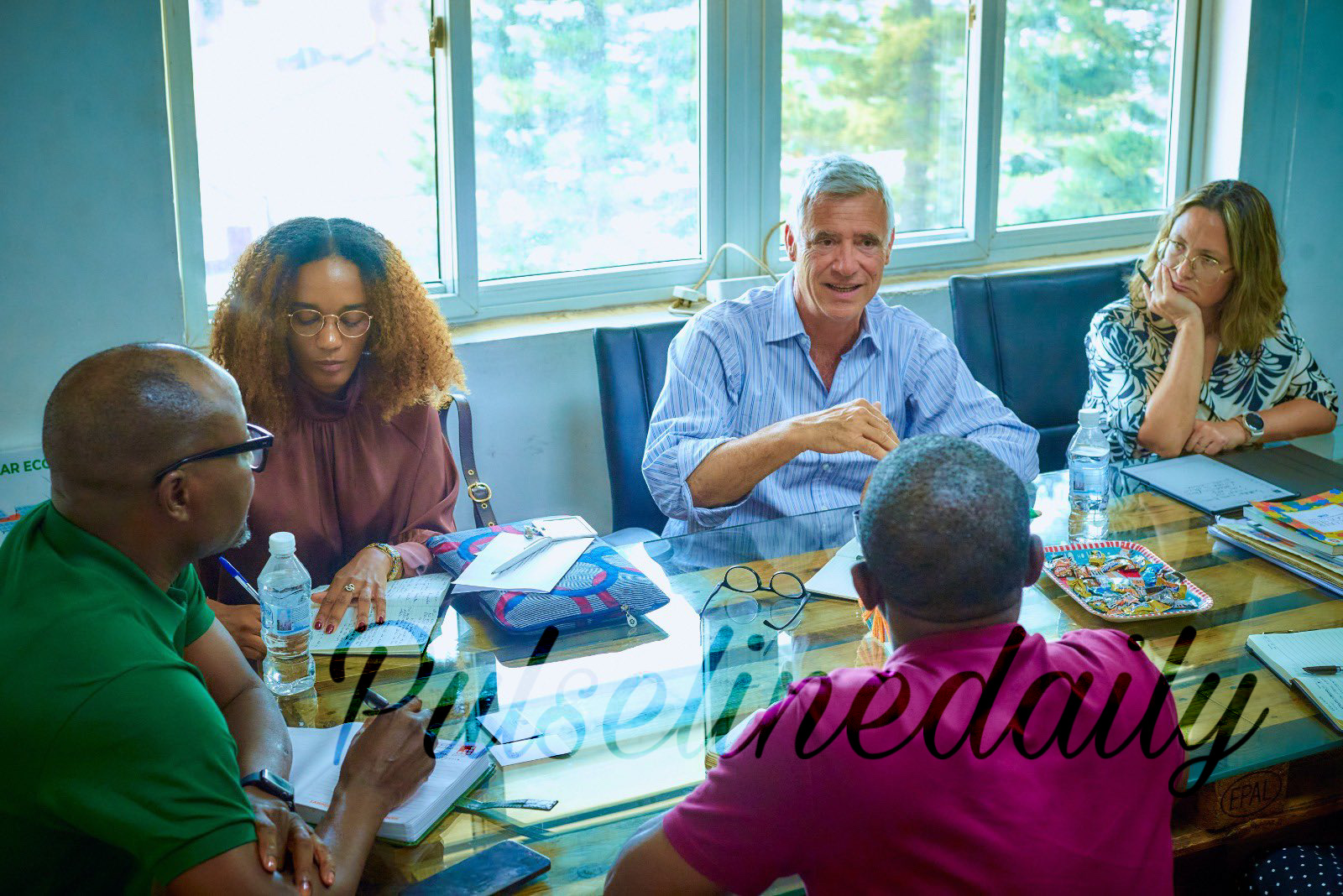
From Landfills to Billions: LAWMA Seeks Strategic Investment to Transform Lagos Waste Crisis into a $2.5 Billion Circular Economy
Summary
The Lagos Waste Management Authority (LAWMA) is actively courting domestic and international investors to fund a sweeping overhaul of the state’s waste management infrastructure one that its Managing Director Dr. Muyiwa Gbadegesin believes could unlock up to $2.5 billion in annual economic value. The investment drive encompasses a 1,500 tonnes per day waste to energy plant capable of generating 60 megawatts of electricity, the closure of the Olusosun and Solous landfills, the construction of transfer loading stations and material recovery facilities capable of processing 4,000 tonnes daily, a pilot biogas project at Ikosi Ketu Market, 500 mobile compactor tricycles, and the deployment of compressed natural gas and electric collection vehicles. Supported by a formal concession agreement with ZoomLion ratified by the Lagos State House of Assembly and an MoU with Dutch firm Harvest Waste, LAWMA is positioning the sector not as a public service burden but as a high-value investment destination a frontier of Africa’s emerging circular economy.
Lagos generates between 13,000 and 15,000 tonnes of waste every single day. That figure staggering in its scale and challenging in its implications has long been framed as a crisis. LAWMA Managing Director Dr. Muyiwa Gbadegesin is now framing it as an opportunity and has placed the call for strategic private sector investment at the centre of a reform agenda that is arguably the most ambitious in the authority’s nearly five decade history.
Industry analysts estimate that Lagos’s daily waste generation, if properly recovered and processed, could yield a circular economy worth up to $2.5 billion annually through recycling, composting, energy conversion, and upcycling. That figure, while aspirational, reflects a fundamental shift in how LAWMA and the Lagos State Government are approaching the city’s waste challenge not as a disposal problem to be managed, but as a material stream with enormous commercial, environmental, and energy value waiting to be unlocked.
Gbadegesin has been explicit about what is standing between Lagos and that potential. He explained that waste management challenges in the state are partly linked to gaps in infrastructure, noting that a rapidly growing megacity like Lagos requires continuous upgrades to its waste transfer and recovery systems. He added that the revamp of Transfer Loading Stations and Material Recovery Facilities would enhance waste evacuation, increase material recovery, reduce pressure on disposal sites, and create opportunities for private sector participation across the waste management value chain.
The Infrastructure Overhaul: What LAWMA Is Building
The investment pipeline LAWMA has assembled is detailed and multi layered. The Lagos State House of Assembly has ratified a concession agreement with ZoomLion to construct transfer loading stations and material recovery facilities capable of processing 4,000 tonnes of waste daily infrastructure that will enable the closure of the Olusosun and Solous landfills, two of the city’s largest and most controversial dumpsites.
Organic waste, which constitutes approximately 50% of Lagos’s total waste stream, will be converted into compost through these facilities, while plastics will be recycled into waste bins transforming what was once disposed of at a cost into products with commercial value.
The crown jewel of the investment agenda is a planned waste to energy facility. LAWMA has disclosed plans for a 1,500 tonnes per day waste to energy plant in partnership with Dutch firm Harvest Waste, expected to generate 60 megawatts of electricity to support emerging industrial zones in Lagos. The Epe plant, to be privately financed, built, and operated, would offer a 12% internal rate of return over 20 years, supported by electricity tariffs and tipping fees a return profile designed specifically to attract the institutional and infrastructure investors LAWMA needs to bring this project to financial close.
A separate biogas conversion initiative, backed by the Swedish government and facilitated through a partnership between LAWMA and the Lagos Metropolitan Area Transport Authority, will repurpose organic waste from food service and market operations to produce biofertiliser and fuel for municipal fleets. A pilot biogas plant at the Epe Food Market is already processing 500 kilograms of organic waste daily to generate electricity for market operations a working proof of concept that LAWMA is deploying to demonstrate viability to prospective investors.
At the grassroots level, LAWMA plans to procure 500 mobile compactor tricycles to address waste management in densely populated or inaccessible communities, with trial operations in Ibeju-Lekki already proving highly successful and prompting plans for statewide replication. Fleet renewal is also a priority, with LAWMA encouraging the acquisition of newer trucks including compressed natural gas and electric-powered vehicles moves that align with both cost-reduction goals and the state’s broader environmental commitments.
Operational Reforms: The Foundation for Investment
No serious investor will commit capital to a sector without confidence in its operational foundations and LAWMA has been working deliberately to strengthen those foundations ahead of its investment outreach. The authority has expanded night cleaning operations and increased street sweeping coverage to 1,000 routes statewide, with 16,000 street sweepers currently engaged across Lagos supported by improved logistics and operational systems.
Accountability within the Private Sector Participant framework has been tightened significantly. Gbadegesin confirmed that 22 PSP operators had been removed for underperformance and replaced with new entrants, underscoring that accountability remains central to LAWMA’s reforms. Each local government now operates a waste management task force supported by LAWMA integration desks, with approximately 75% of councils having established these structures a decentralised accountability architecture that ensures the investment environment is not dependent on a single central authority to deliver results.
LAWMA has also announced the recruitment of 377 environmental health officers beginning January 2026 to strengthen compliance and enforcement an investment in human capital that signals the authority’s understanding that infrastructure alone cannot deliver the behavioural transformation a circular economy requires.
The decommissioning of Olusosun and Solous 3 landfills has entered an 18 months window , with both sites being transitioned into transfer loading stations and material recovery facilities. The state is also moving to transform decommissioned landfill sites into eco parks or recreational facilities slashing methane and greenhouse gas emissions, reducing flood risk, creating green jobs, and advancing a genuinely circular economy model in Africa’s largest city.
The Investment Case: Why This Moment Matters
With over 80% of landfill capacity near exhaustion and two-thirds of residents still relying on informal or illegal dumping, the investment imperative is not a future consideration it is an immediate necessity. Lagos, one of the fastest-growing urban centres globally, has an estimated population exceeding 20 million, with some projections suggesting closer to 27 million pending updated census validation. At that scale, waste generation demands robust infrastructure across every stage of the value chain.
If Lagos were to recover even 20-30% of its municipal solid waste, it could yield between ₦60 billion and ₦100 billion annually from recyclables, energy, and compost figures that make the sector compelling not just for environmental investors but for infrastructure funds seeking long term, stable return assets in Africa’s most dynamic urban economy.
Analysis
LAWMA’s investment drive is the most credible attempt Lagos has made to reframe its waste crisis in commercial terms and the timing is significant. The city is at an infrastructure inflection point: landfills are exhausted, population growth is relentless, and the informal systems that have historically absorbed the overflow are increasingly overwhelmed. The choice facing Lagos is not whether to invest in waste infrastructure but whether that investment will be structured, strategic, and transformative, or reactive, fragmented, and perpetually insufficient. What distinguishes the current reform agenda from its predecessors is the specificity of the investment architecture being assembled. The ZoomLion concession agreement ratified by the Lagos State House of Assembly, the MoU with Harvest Waste for the 60-megawatt energy plant, the Swedish backed biogas initiative, the piloted tricycle compactor system in Ibeju-Lekki each of these represents a tangible, contracted, or operationally demonstrated step toward the $2.5 billion circular economy target. This is not a vision document. It is a portfolio of projects in various stages of development, and LAWMA’s call for strategic investment is a call for partners to accelerate and scale what is already underway. The 12% internal rate of return on the Epe waste-to-energy plant over 20 years is a deliberately investor friendly signal. For infrastructure funds, development finance institutions, and impact investors seeking long-dated, yield-generating assets in frontier markets, a 20-year offtake arrangement backed by electricity tariffs and tipping fees in Africa’s largest city is a genuinely attractive proposition. The question is not whether the economics make sense they do. The question is whether Lagos’s regulatory and contractual environment offers investors the legal certainty and operational predictability they require to commit capital at the scale the transformation demands. Gbadegesin’s programme level reforms the 1,000 routes sweeping network, the 16,000 street sweepers, the LGA task forces, the PSP accountability framework are not separate from the investment story. They are its foundation. No investor will fund a 1,500 tonnes waste to energy plant without confidence that the waste feedstock will arrive consistently and at the volumes required. No recycler will commit to a material recovery facility without knowing that source-segregated waste will actually be delivered. The operational reforms LAWMA has been building are the investment readiness infrastructure and their continued strengthening is what will ultimately determine whether Lagos’s $2.5 billion circular economy ambition becomes a case study or a cautionary tale.
Tags