Data Before Policy: VP Shettima Pledges Federal Ownership of Landmark National Substance Use Survey as UNODC and MTN Nigeria Foundation Sign Cooperation Agreement
Summary
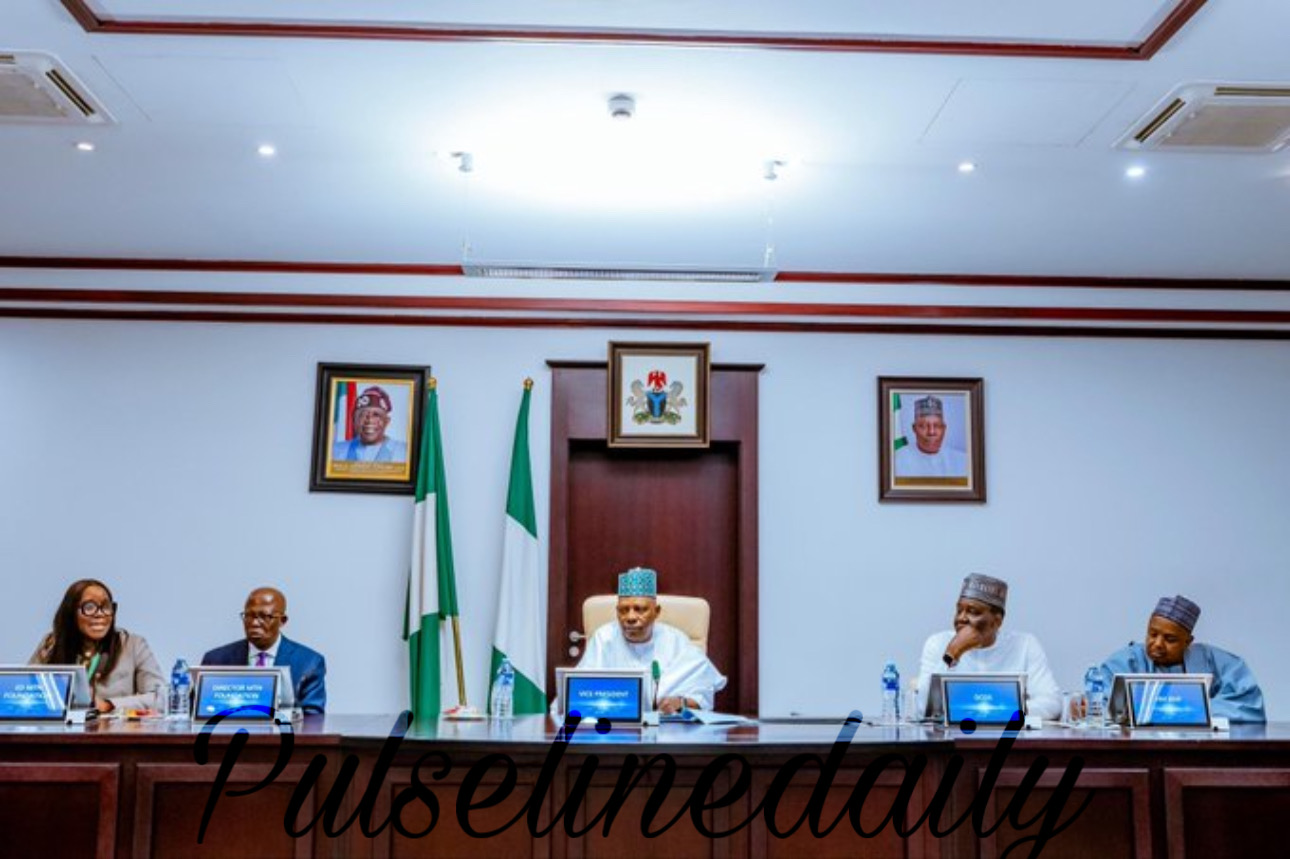
Vice President Senator Kashim Shettima (@KashimSM) on Wednesday, April 29, 2026, pledged the Federal Government’s full ownership and leadership of the National Substance Use Survey in Nigeria a landmark research initiative jointly undertaken by the United Nations Office on Drugs and Crime and the MTN Nigeria Foundation. Speaking at the signing of the letter of acceptance for cooperation at the Presidential Villa in Abuja, Shettima was unambiguous that the Office of the Vice President’s role is not ceremonial, and demanded that the survey’s findings land as “policy inputs, not as documents,” with a final report due no later than the first quarter of 2027. The survey will produce granular local government-level data on substance use patterns across Nigeria data that will underpin targeted intervention design across health, law enforcement, and social welfare systems. MTN Nigeria Foundation Executive Director Odunayo Sanya and UNODC Country Representative Cheikh Ousmane Toure both described the collaboration as a model of public/private UN partnership for national development.
At the Presidential Villa in Abuja on Wednesday, three institutions the Federal Government of Nigeria, the United Nations Office on Drugs and Crime, and the MTN Nigeria Foundation formally bound themselves to a research initiative that its participants described in terms far weightier than the signing of a cooperation letter might typically warrant. What they signed is a commitment to produce Nigeria’s most comprehensive mapping of substance use since 2018 and, more importantly, to ensure that what is found does not disappear into a report that collects dust on an official’s shelf.
Vice President Kashim Shettima assured the Federal Government’s full commitment to the National Substance Use Survey, led by UNODC and the MTN Nigeria Foundation, emphasising its role in safeguarding Nigeria’s youth and national survival. According to the Vice President, the Federal Government is involved in the initiative, which he said is essential to Nigeria’s survival as a nation. The language was deliberate and telling: not a bureaucratic priority, not a development programme, but a matter of national survival a framing that situates substance use not as a social welfare concern at the margins of governance but as a core threat to the country’s human capital and its future.
“We expect the findings to land as policy inputs, not as documents, and we expect a full and final report no later than the first quarter of next year,” Shettima stated. The deadline Q1 2027 is significant not only for its specificity but for what it implies: that the survey must be designed, executed, analysed, and reported within a defined window, under government scrutiny, with the expectation of immediate policy application. This is not the language of a government that intends to receive a report and deliberate indefinitely. It is the language of a government that has already decided what it will do with the data and wants the data delivered in time to act.
Shettima stressed that his office’s involvement goes beyond ceremony: “I want to be clear that the Office of the Vice President’s role is not ceremonial. We are in this for the outcome because the survey report will provide relevant authorities with granular local government data required to design and implement critical interventions.” That granularity local government-level data is the feature of this survey that separates it most sharply from previous national drug use research, including the 2018 UNODC survey which, while nationally significant, was too broad in its geographic resolution to guide community specific programming. Shettima praised the partners’ contributions as a model for private sector driven national development.
MTN Nigeria Foundation: Aligning Corporate Resources With National Need
MTN Nigeria Foundation Executive Director Mrs. Odunayo Sanya highlighted the survey’s aim to deepen ties with the government, describing the initiative as aimed at “deepening the partnership between the Foundation and the federal government in terms of national development and preserving the future of Nigeria’s youth population.” Sanya noted that the comprehensive local government level survey aligns with MTN’s ongoing projects nationwide.
The MTN Nigeria Foundation’s investment in this survey is a significant deployment of private sector resources in direct support of a government research and policy agenda. The Foundation which has historically focused on education, health, and economic empowerment programmes is here extending its mandate into the data infrastructure that makes effective public policy possible. That extension is itself noteworthy: it signals a recognition within Nigeria’s corporate community that the substance use crisis is not a government problem at arm’s length from private sector interests, but a direct threat to the workforce, consumer base, and social fabric on which business depends.
UNODC: Technical Expertise Meets Nigerian Leadership
UNODC Country Representative Cheikh Ousmane Toure hailed the collaboration as a testament to Nigeria’s resolve under President Bola Tinubu, stating: “The UNODC was inspired to commit its technical expertise in the project by the quality of leadership demonstrated by Nigeria, which has shown in concrete terms how vision and purpose combine to deliver landmark results.”
Toure affirmed the UNODC’s ongoing commitment, calling the project “the beginning of a more strategic engagement between the government of Nigeria, the private sector and the United Nations family.” The framing of this survey as a beginning rather than an end point is an important signal: the UNODC is signalling that the institutional relationship being formalised on Wednesday is intended to outlast this single survey cycle and establish a durable framework for collaborative research and intervention.
The last comparable national survey on substance use in Nigeria was conducted in 2018 and published in 2019. According to that 2018 National Drug Use Survey, an estimated 14.4 million Nigerians one in seven people aged 15 to 64 had used a psychoactive drug in the past year, excluding alcohol and tobacco. In a country whose population has grown by an estimated 30 million people since that survey was conducted, whose economic conditions have deteriorated significantly, and whose social infrastructure has been strained by years of insecurity, inflation, and youth unemployment, those 2018 figures are almost certainly a significant undercount of the current reality. The 2026 survey will establish a new baseline and, critically, will tell policymakers where the problem is most acute, at the local government level, rather than painting the country with a single national brush.
Present at Wednesday’s signing were the Minister of Budget and Economic Planning, Senator Atiku Bagudu, and MTN Nigeria Foundation Board non executive director Simon Aranonu a representation of both fiscal government and corporate governance at the ceremony that underscored the institutional seriousness with which all parties are approaching the initiative.
Analysis
Vice President Shettima’s insistence that the Office of the Vice President’s role in this initiative is “not ceremonial” is the most important thing said at Wednesday’s signing and it deserves to be taken seriously both as a commitment and as a standard by which the government’s follow-through will be measured. Nigeria has a well documented history of high profile signing ceremonies that produce documents without producing change. The Vice President has publicly pre-empted that outcome by naming it directly and disavowing it. The Q1 2027 deadline for the final report is a clock that is now running in public. The substance use crisis in Nigeria is one of the country’s most underacknowledged governance failures. The 2018 UNODC survey’s finding that nearly one in seven Nigerians between 15 and 64 had used a psychoactive drug in the preceding year a figure that experts believe has grown substantially since describes a public health emergency of the first order. The populations most affected are overwhelmingly young, male, and concentrated in Nigeria’s urban and peri-urban communities precisely the demographic that is also most vulnerable to recruitment by insurgent groups, criminal networks, and organised criminal enterprises. Substance use and insecurity are not parallel crises; they feed each other, and addressing one without addressing the other is structurally incomplete. What makes this survey initiative potentially transformative is the local government level granularity that Shettima emphasised. National level data tells a government that there is a problem. Local government level data tells it where the problem is worst, what substances are involved, what age groups are most affected, and what social conditions correlate with the highest rates of use. That is the difference between knowing that a building is on fire and knowing which floor to send the firefighters to. If the data is collected, analysed, and published with the rigour that UNODC’s technical expertise can provide, it will be the most actionable research instrument that Nigeria’s drug policy establishment has ever had. The MTN Nigeria Foundation’s participation as a co-financing and co-implementing partner is also significant beyond this specific survey. It models a relationship between the private sector and the research infrastructure of public governance that Nigeria desperately needs to institutionalise. Governments in developing economies rarely have the resources to conduct the kind of high quality, nationally representative social surveys that effective policy requires. Corporate foundations with the scale, the reach, and the commitment to national development that MTN Nigeria Foundation has demonstrated can help fill that gap not as charity, but as a strategic investment in the stable, healthy, productive society on which their own long term interests depend. Wednesday’s signing was a small but meaningful step toward making that partnership a durable feature of Nigerian governance.
Tags